
Faith
Socinianism
I am a Socinian. This tradition — founded by Lelio and Fausto Sozzini in the 16th century — joins faith with reason and biblical exegesis. More at socinianism.com.
Socinian · Author · Translator · Editor
Socinian, author & translator. I translate early-modern theology from Latin into six languages and run platforms about the rational tradition of the Sozzini.
Faith with reason and Scripture.
01
a first approach
My name is Marcin Poholski. As an author and translator I render the writings of the Socinians from Latin into German, English, Polish, French, Spanish and Italian, and run the portals sozinianismus.de and socinianism.com.
In 2020 I was baptised as an Adventist, and in 2024 as a unitarian — in the name of Jesus. Today the rational, Scripture-based theology of the Socinians is a central part of my life. Through my books and the two portals I bring it to a wider readership in six languages.
02
eighteen English titles as author & translator
My English publications: one work of my own on end-time prophecy and an edited seeress’s book of 1905, alongside translations from Greek and Latin — Euclid’s Elements, ten writings of Faustus Socinus including his Theological Lectures, the two ethics of Johannes Crell, Michael Servetus’s critique of Trinitarian doctrine, Wiszowaty’s Rational Religion and the celebrated Racovian Catechism.
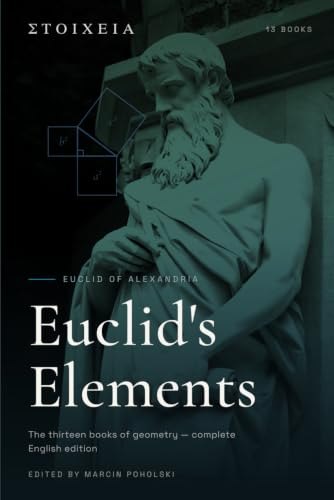
Translator · Euclid
The thirteen books of the Elements in a new English rendering: from the first definitions, postulates and axioms through plane geometry, the theory of proportion and the circle to the irrational magnitudes and the five Platonic solids — antiquity’s most rigorous edifice, proved proposition by proposition.
View on Amazon: Euclid’s Elements
Translator · A. Wiszowaty
Wiszowaty’s principal work Religio rationalis (1685): why the judgment of sound reason must hold even in theological and religious controversies — a brief, luminous defence of thinking within faith, translated from the Latin.
View on Amazon: Rational Religion
Translator · Schmalz · Völkel · Moskorzowski
The textbook of the Polish Socinians (Raków, Polish 1605, Latin 1609): in question and answer it unfolds the doctrine of Holy Scripture, of the one God, of the man Jesus Christ and his prophetic, priestly and kingly office, of baptism and the Lord’s supper — the ripest summa of early Unitarianism.
View on Amazon: Racovian Catechism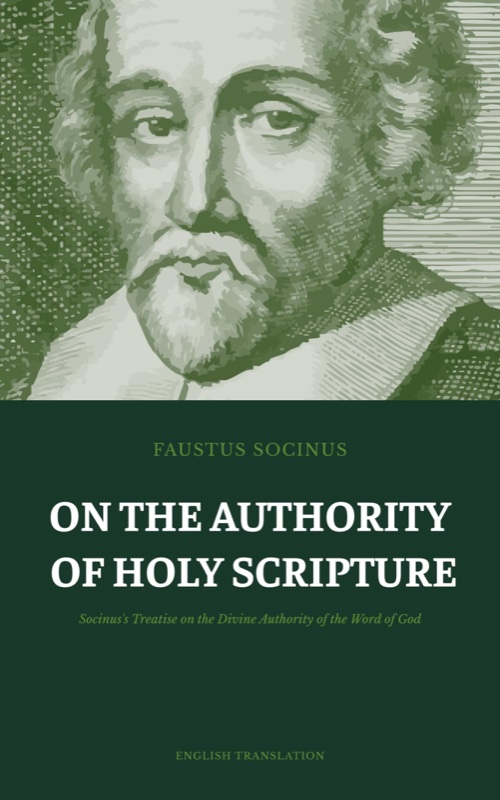
Translator · F. Sozzini
De auctoritate Sacrae Scripturae: Socinus’s groundwork for why the Bible deserves belief — a historical and rational defence of the credibility of the New Testament witnesses, read as apologetics for centuries even by his opponents.
View on Amazon: On the Authority of Holy Scripture
Translator · F. Sozzini
What constitutes the true Church — succession, office, or doctrine? Socinus defines the Church by the truth of its teaching alone, and asks whether it may at times subsist without any visible form.
View on Amazon: On the Church
Translator · F. Sozzini
De Jesu Christo Servatore, the great polemic against Jacques Couvet: Christ saves not by vicarious satisfaction on the cross but as way, teacher and exalted Lord — Socinus’s most consequential work and the fountainhead of the satisfaction controversy.
View on Amazon: On Jesus Christ the Saviour
Translator · F. Sozzini
How is the sinner made righteous before God? Socinus’s answer beyond Luther and Calvin: forgiveness from God’s free goodness and the obedience of faith — rather than an imputed alien righteousness.
View on Amazon: On Justification
Translator · F. Sozzini
Socinus’s running exposition of Matthew 5–7: the beatitudes, the antitheses — on oaths, on retaliation, on love of enemies — and the Lord’s Prayer, read as the binding rule of life for Christ’s disciples.
View on Amazon: Exposition of the Sermon on the Mount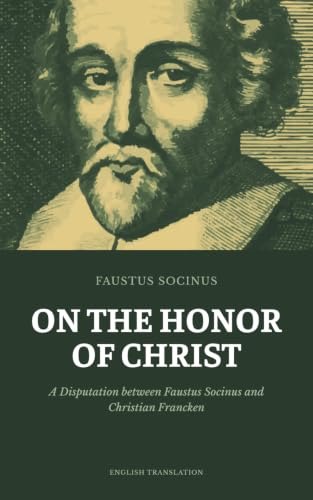
Translator · F. Sozzini
De honore Christi: the disputation with the ex-Jesuit Christian Francken on whether divine honour is due to the exalted Christ — two sharp minds on worship, monotheism and the limits of reason.
View on Amazon: On the Honor of Christ
Translator · F. Sozzini
De non invocando Christo: the exchange with Franciscus Davidis on whether Christ may be invoked in prayer — Socinus’s distinction between adoration and invocation from the Kolozsvár debates of 1578/79.
View on Amazon: On the Non-Invocation of Jesus Christ
Translator · F. Sozzini
The disputation against Andreas Volanus on the essence of Christ and the expiation of sins: Socinus’s defence of the true man Jesus against the doctrine of two natures — closely argued and rendered faithfully.
View on Amazon: On the Nature of Jesus Christ
Translator · F. Sozzini
Verse by verse through the First Epistle of John: fellowship with God, walking in the light, brotherly love and faith in Jesus as the Christ — exegesis in the spirit of Socinian interpretation.
View on Amazon: Commentary on the First Epistle of John
Translator · J. Crell
Johannes Crell’s survey of Aristotle’s doctrine of virtue, examined and corrected by the standard of Holy Scripture: where the philosopher stands and where revelation surpasses him — the Ethica Aristotelica of the rector of Raków, translated from the Latin.
View on Amazon: Aristotelian Ethics
Translator · J. Crell
The companion to the Aristotelian Ethics: Crell’s Ethica Christiana develops the doctrine of virtue not along Aristotle but out of Scripture itself — in five books an explanation of the virtues and vices of which Holy Scripture speaks, from wisdom and faith to meekness, long-suffering and mercy.
View on Amazon: Christian Ethics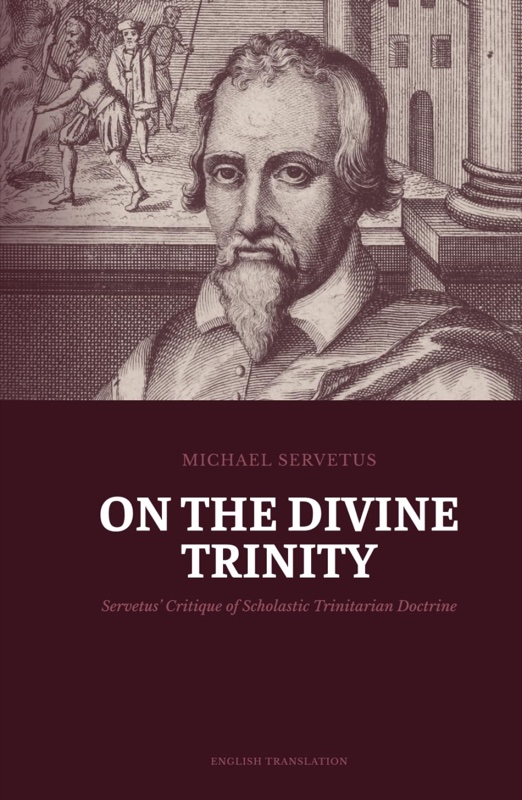
Translator · M. Servetus
Servetus’s critique of the scholastic doctrine of the Trinity: the classical proof texts, the terms of substance and person, and the question whether the dogma can stand before Scripture and reason — translated from the Latin.
View on Amazon: On the Divine Trinity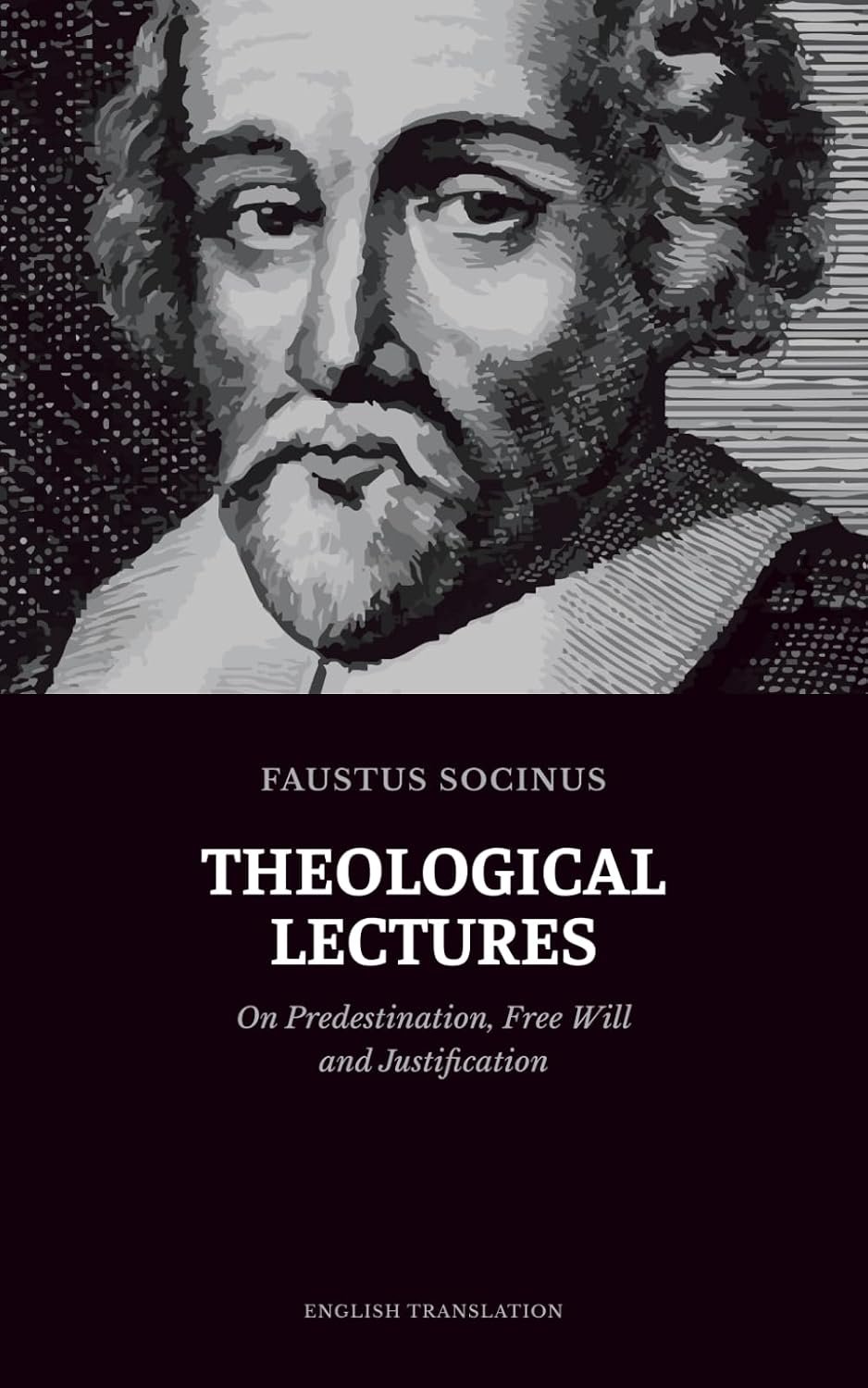
Translator · F. Sozzini
The Praelectiones Theologicae from Socinus’s posthumous papers, published by Valentin Schmalz at Raków in 1609: that Adam was mortal even before the fall, that man’s will has remained free and that God predestines no one to salvation or damnation — up to his boldest thesis, that God does not foreknow the free future acts of men, a position taken up again only in the twentieth century as “open theism”.
View on Amazon: Theological Lectures
Author · 2021
The recorded prophecies of ten-year-old Slavik Krasheninnikov of Russia: on the mark of the beast, the coming Antichrist and the last days — collected, arranged and introduced.
View on Amazon: Słavik Kraszennikov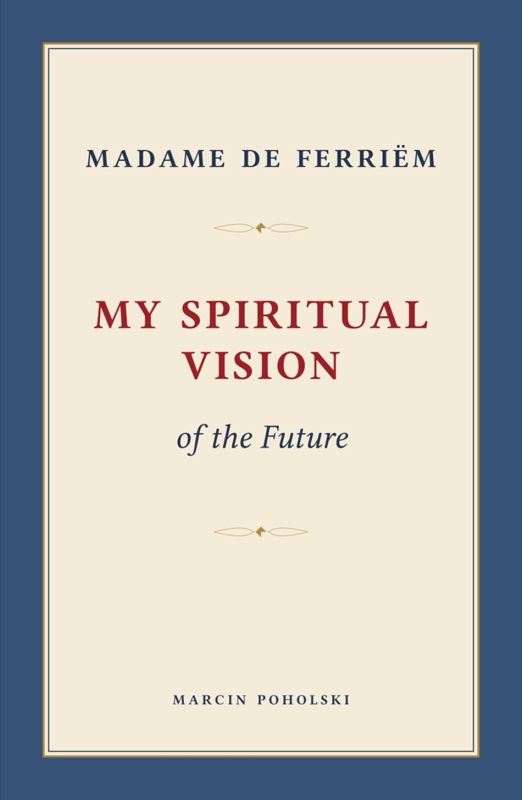
Editor · de Ferriëm
The Berlin seeress de Ferriëm had her predictions printed deliberately before the events; in 1905 she took up the pen herself. Her account runs from her parents’ house through sittings and trance addresses to the visions — the burning city, the airship of the future, world war and world peace — and closes with a chapter on error and deception in occultism. Newly set from the Fraktur edition of 1905.
View on Amazon: My Spiritual Vision of the Future03
Scripture and the Socinian writings, linked and offline

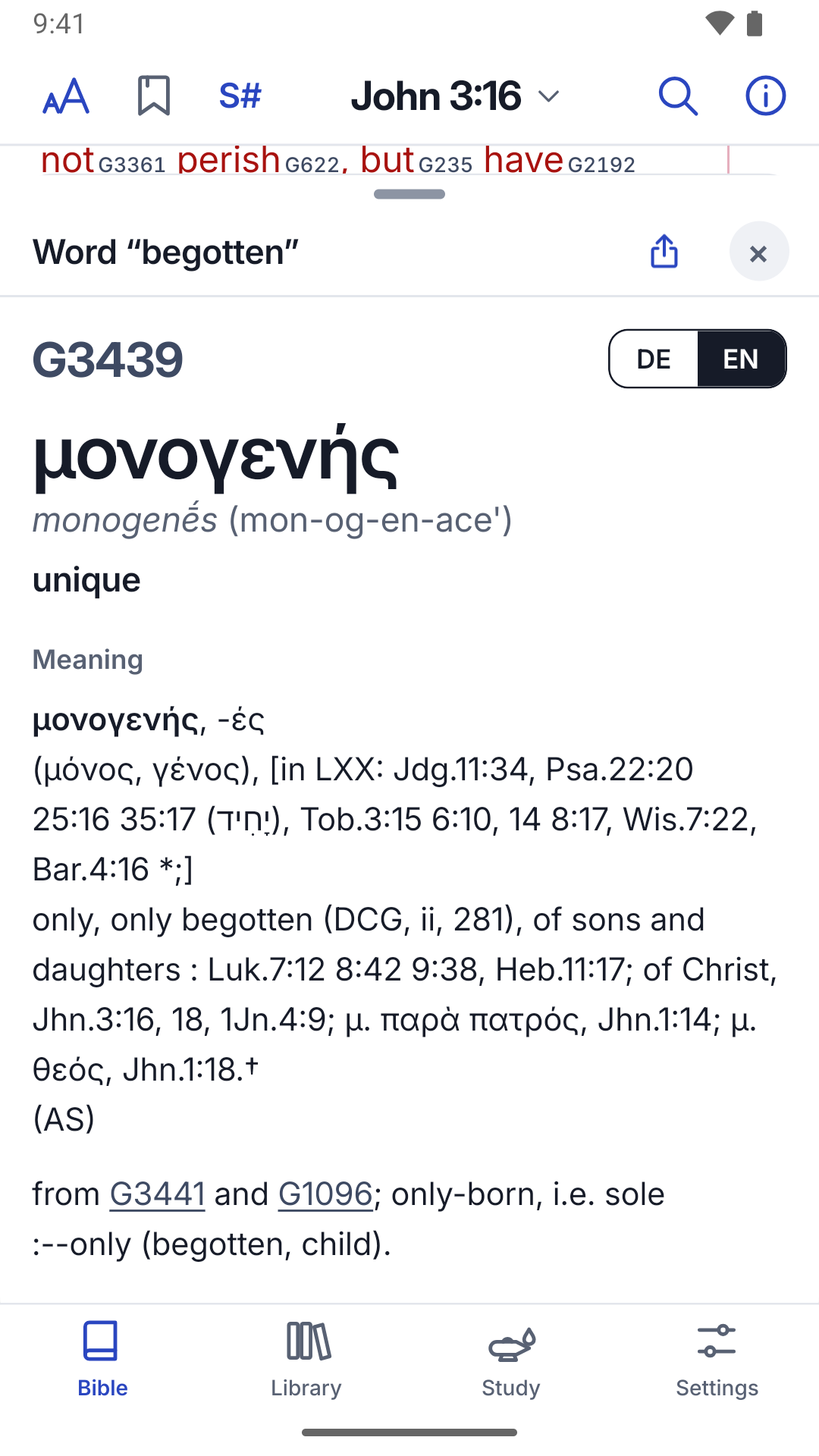
A Bible with Strong’s numbers, the original text and the Socinian library
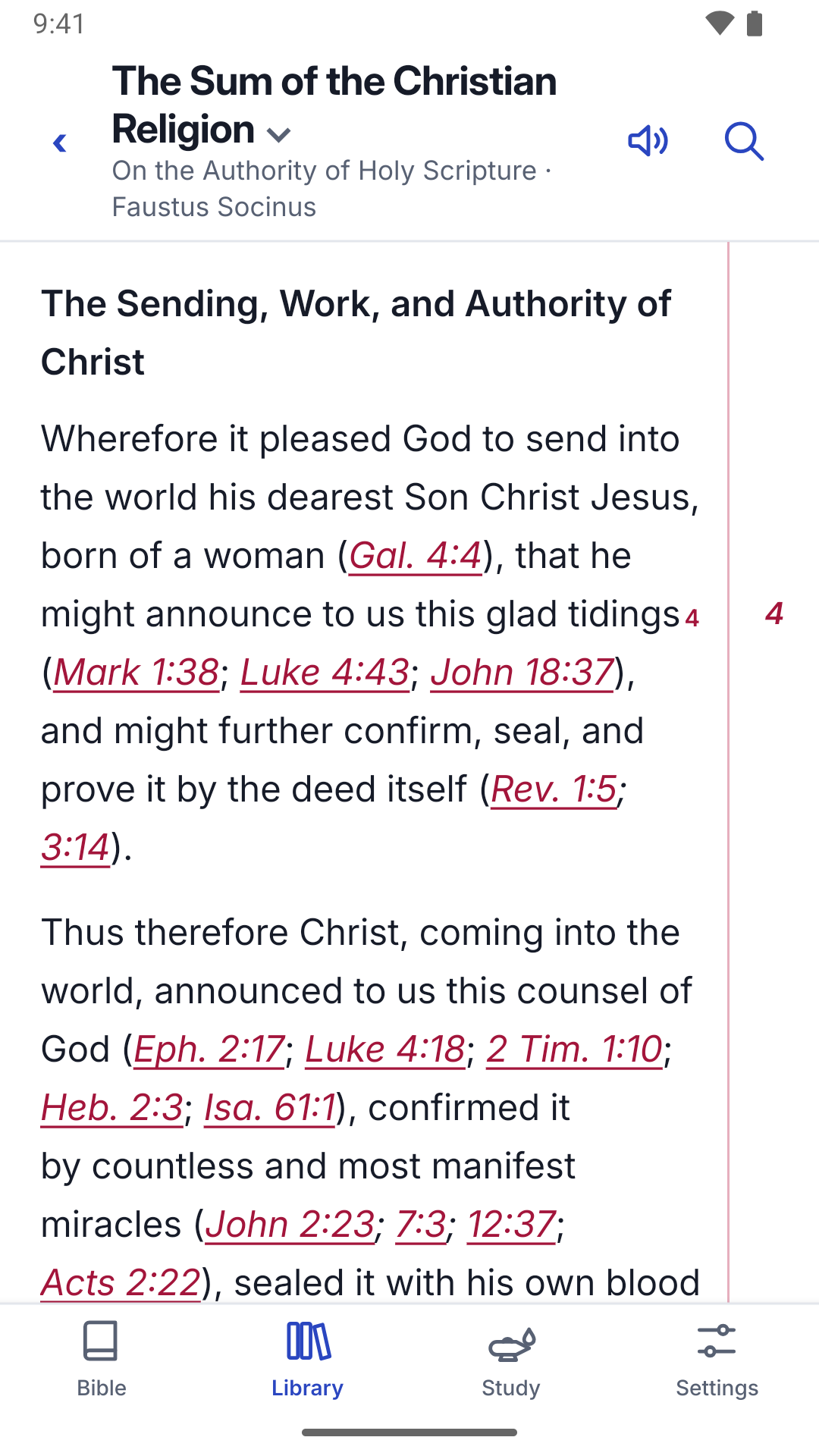
I built Socinus Bible, a Bible app that brings Holy Scripture together with the writings of the Socinians. Beside the verses, a book symbol in the margin shows where the works expound them; within a work, every Bible reference is a link back into the Bible.
Everything lives on the device and works without an internet connection. Interface and content are available in English and German.
Version 1.0.1 with the Berean Standard Bible, the Elberfelder 1905 and three new works is out on Google Play; for iPhone and iPad it will follow. Until then the App Store has version 1.0.0 with three Bible editions and 17 works.



04
the two measures against which I weigh everything
seven sentences
“The beginning is half of the whole.”
Plato Laws VI, 753e
“I know that I know nothing.”
Socrates as reported by Plato · Apology 21d
“All men by nature desire to know.”
Aristotle Metaphysics I, 1
“Dare to make use of your own understanding.”
Immanuel Kant What is Enlightenment? · 1784
“A faith that is forced is no faith.”
Johannes Crell Vindiciae pro religionis libertate · 1637
“Not one word about the Trinity is found in all of Holy Scripture.”
Michael Servetus De Trinitatis erroribus · 1531
“It is not reason that must bow to faith, but faith to reason.”
Faustus Socinus Lectiones sacrae · Kraków, 1611
six verses
“Prove all things; hold fast that which is good.”
1 Thessalonians 5:21 King James Version
“… and searched the scriptures daily, whether those things were so.”
Acts 17:11 King James Version
“And this is life eternal, that they might know thee the only true God, and Jesus Christ, whom thou hast sent.”
John 17:3 King James Version
“… that ye may prove what is that good, and acceptable, and perfect, will of God.”
Romans 12:2 King James Version
“But to us there is but one God, the Father, of whom are all things.”
1 Corinthians 8:6 King James Version
“If any of you lack wisdom, let him ask of God.”
James 1:5 King James Version
06
faith & language
Faith
I am a Socinian. This tradition — founded by Lelio and Fausto Sozzini in the 16th century — joins faith with reason and biblical exegesis. More at socinianism.com.
Language
I translate selected writings of the Socinian tradition from Latin, to make them accessible to a wider audience — so far in German, English, Polish, French, Spanish and Italian.
07
how to reach me
Whether about theology, the books or translation — I welcome real messages from real people.